Reducing cycle time on 6mm mild steel without losing edge quality
Summary: The biggest cycle-time gains on 6 mm mild steel usually come from switching from oxygen to high-pressure air or nitrogen on a 6 kW-plus source, using common-line nesting and micro-joints, and tuning pierce time. Edge quality holds if focus position and nozzle condition are controlled.
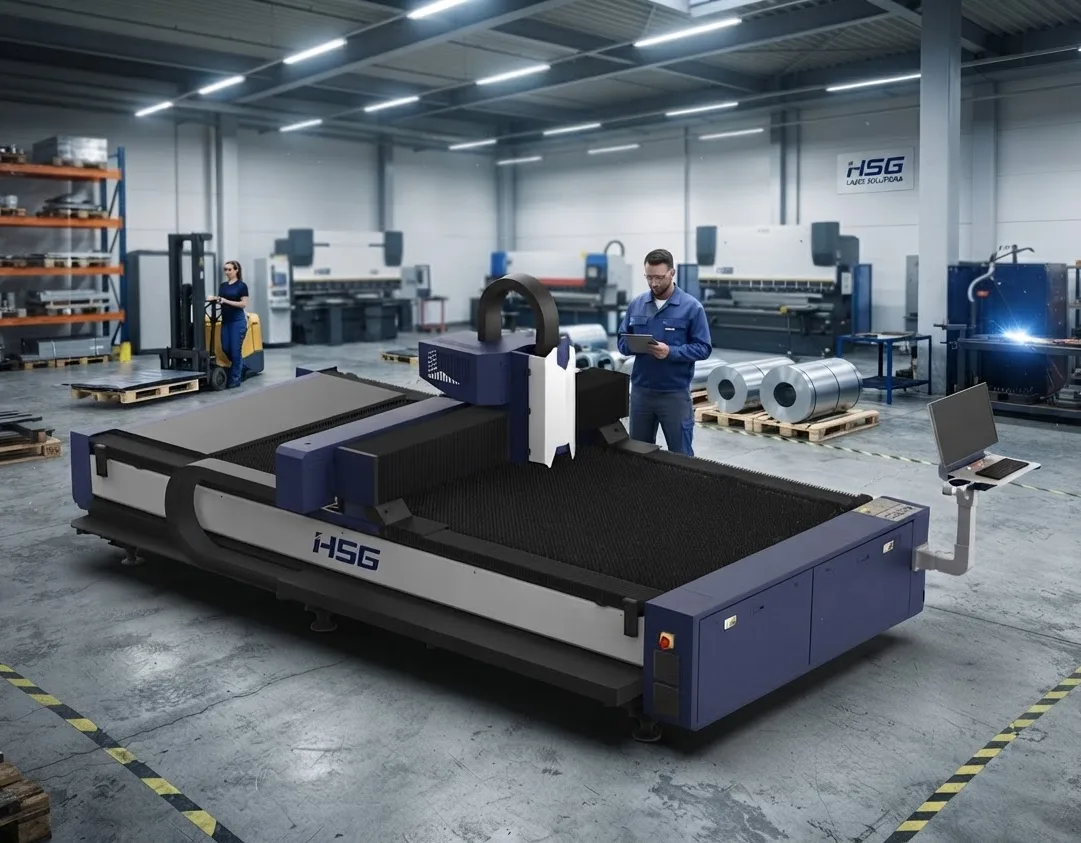
6 mm mild steel is the bread and butter of Indian sheet-metal shops. It is also where small process changes add up to large savings, because the same part may be cut thousands of times a month.
The starting point
The customer ran a 6 kW single-platform fiber laser cutting brackets with oxygen assist. Parts were good, but each sheet took 14 minutes and oxide on the edges had to be removed before powder coating.
What we changed
1. Assist gas
With 6 kW available, we moved the job to high-pressure air. Cutting speed more than doubled on straight lines, and the oxide-free edge went straight to powder coat.
2. Pierce settings
Stepped piercing with a tuned focus shift cut pierce time per hole by about 40%. On a bracket with 18 holes, that is where much of the cycle time was hiding.
3. Nesting
Common-line cutting between identical parts and micro-joints instead of tabs removed redundant cutting length and kept parts stable on the slats.
Results
- Sheet cycle time: 14.0 → 9.6 minutes (−31%)
- Secondary deburring/oxide removal: eliminated
- Edge squareness: within customer tolerance on 100% of sampled parts
What to watch
Air cutting is sensitive to nozzle condition and focus. We added a nozzle check at every shift start and set the production database to the tuned parameters so every operator runs the same recipe.
Frequently asked questions
- Is air cutting good enough for 6 mm mild steel?
- On a 6 kW or higher fiber laser, yes. Air cutting is fast and leaves an oxide-free edge, though slight dross may appear if nozzle and focus are not maintained.
- Does nesting really affect cycle time?
- Significantly. Common-line cutting and optimised lead-ins reduce total cut length and pierces, which often saves 10–20% of sheet time.
Tags: Process, Case study